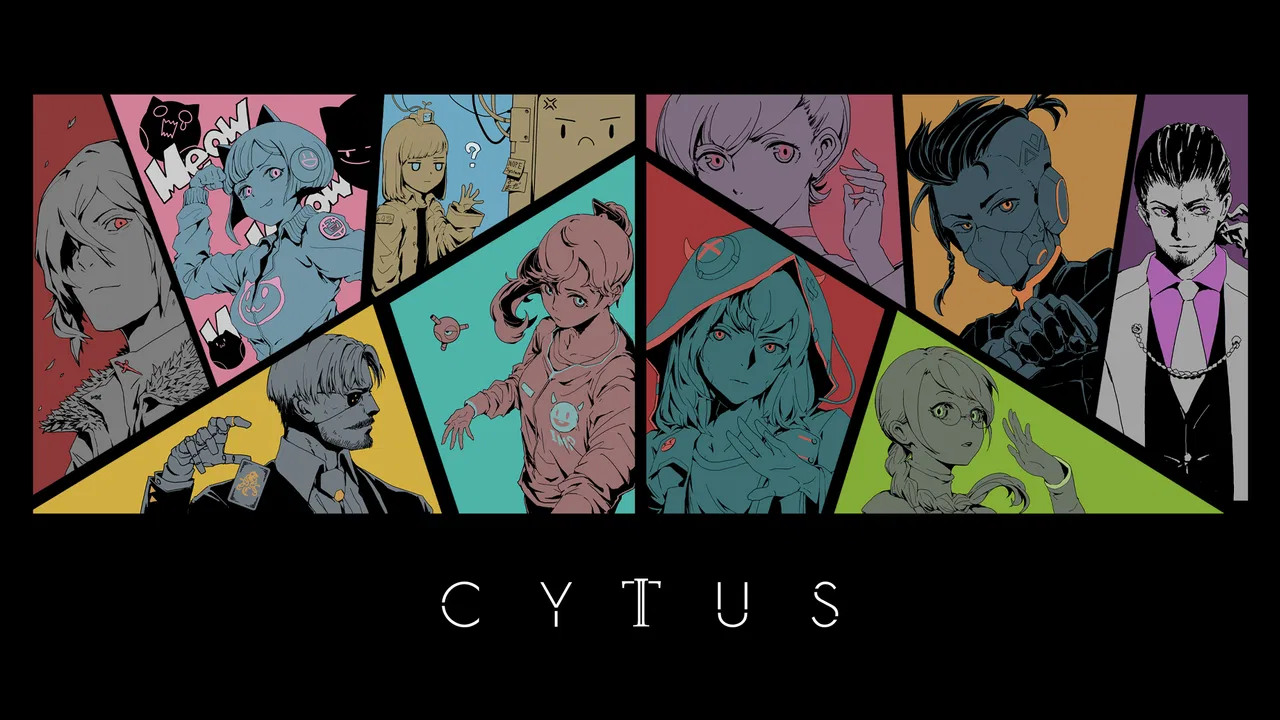
Cytus II
- 4.1
- Rating
- 1.00M
- Installs
- $1.99
- Price

 Analysis by App-foxy
Cytus II is the kind of music game I open when I want something more absorbing than a quick tap-to-score distraction. It comes from RAYARK, carries a Teen age rating, and asks for a purchase of $1.99 before optional in-app purchases ranging from $1.99 to $79.99 per item. That pricing matters because this is not simply a free sampler that happens to include a rhythm mode; it is a paid entry into a stylized, story-led music experience that expects you to spend time learning its patterns.
My first impression is that the game’s appeal depends on whether you enjoy improving through repetition. The central pleasure is not just hearing a track and tapping along once. It is recognizing how a chart moves, recovering after a mistake, and eventually reaching the point where your hands respond before you consciously think about every note. The store summary asks, “Can you hear me?”, but my answer is that the game is more interesting when you ask yourself whether you can keep up with what you hear.
How the game feels during ordinary play
The basic experience is easy to understand, but that does not make it shallow. Notes appear in relation to a moving line, and the challenge comes from reading timing, position, and density together. I found the early learning curve approachable enough for someone who has played mobile rhythm games before, while later sessions demand much more attention. You are not merely pressing at a fixed rhythm; you are watching the screen, anticipating movement, and adjusting your timing when the chart changes character.
You May Also Like

 Blood Strike: 2.5 Anniversary
Blood Strike’s Loadouts Turn Every Drop Into a Tactical Gamble
A close look at Blood Strike’s custom loadouts: how fast access to signature weapons reshapes its battle royale rhythm, rewards preparation, and narrows the gap between fights.

 Pandora - Music & Podcasts
Pandora’s Music Is Easy to Start, but Harder to Recover
Pandora’s strength is its low-effort path from a seed to a station. Its weak spot is how much confidence it asks you to place in connection, setup, and quiet recovery.

 8 Ball Pool
 Is Built on Rivalries, Rematches, and Routine
A close look at the rivalries, rematches, shared routines, and unanswered safety questions that turn a quick pool match into a persistent mobile community.

 Samsung Music
’s Quiet Strength Is Playing What You Already Own
Its reach comes less from spectacle than from dependable access to a personal library. That simplicity is both the app’s strongest retention engine and its ceiling.

 AccuWeather: Weather Radar
AccuWeather Review: A Quick, Clear Forecast for Everyday Decisions
For everyday plans, the best forecast is the one you can understand quickly. AccuWeather makes rain timing, radar, and local conditions easy to act on, with a few trade-offs.

 Hill Climb Racing
Why Hill Climb Racing Still Turns Crashes Into One More Run
A tiny car, a bumpy hill and one more upgrade: Hill Climb Racing keeps resurfacing because its simple chaos makes every near-miss feel personal.
More From Our News Desk
View All News


That creates a particular sense of speed. A song can feel calm for several seconds and then suddenly become visually busy. The game often asks for quick decisions without making every section feel equally frantic, which gives a successful run a satisfying rise and fall. When I miss, the problem usually feels understandable: I looked too late, mistimed a cluster, or allowed the visual movement to pull my attention away from the beat.
I would not describe the game as a passive music player with a score attached. It needs active concentration. If I am tired, distracted, or trying to play while someone is talking beside me, even a familiar song can become difficult. That is a strength for players who want a demanding rhythm challenge, but it also means this is not always the best choice for a short, relaxing break.
The music is central to the experience, and the game’s presentation gives each session a strong identity. I noticed that I paid more attention to chart structure when I liked the track, because I wanted to replay it rather than simply clear it. That makes personal taste important. Someone looking for one narrow musical style may find the experience less consistent than someone who enjoys exploring different moods and arrangements.
What makes the speed feel fair
The most useful skill is learning to read the chart slightly ahead of the moving line. Beginners often stare at the exact point where a note must be hit, which leaves almost no time to react. I had better results by scanning the next group of notes, identifying whether it was a simple sequence or a sudden burst, and then letting the timing line confirm my expectation.
This is also why replaying a difficult passage can be more valuable than immediately choosing another song. A failed attempt shows where my attention broke down, but a second attempt lets me test a specific correction. I might keep my eyes higher on the screen, relax my tapping hand, or stop chasing individual notes and instead follow the musical phrase. That kind of deliberate practice is one of the game’s less obvious rewards.
Players coming from slower rhythm games should expect an adjustment period. The challenge is not only faster fingers. It is the combination of visual tracking and rhythm memory. I found that rushing my movements made things worse, particularly in dense sections. A lighter touch and earlier reading were more reliable than trying to tap harder or faster.
When sessions become demanding
Heavy-use moments arrive when a chart combines rapid notes, changing directions, and a busy visual field. Those sections put pressure on both the player and the device. From the player’s side, fatigue becomes noticeable before the session is over: my eyes stop distinguishing patterns cleanly, and small timing errors begin to multiply. Short breaks are genuinely useful here, especially if I am repeating the same song without improving.
From the device’s side, I would treat longer sessions more seriously than a single casual attempt. The game is visually active and music-focused, so a phone that already struggles with demanding games may not provide the same comfortable experience. I would close unrelated apps, keep the screen clean, and avoid playing while the device is unusually warm. These are simple habits, but they reduce distractions and make it easier to tell whether a miss came from my timing or from an uncomfortable playing setup.
I also recommend using headphones when possible, particularly when learning a track. The beat becomes easier to follow when outside noise is reduced, and the music provides information that the screen alone cannot. This is not just an audio-quality suggestion: listening carefully helps me predict the shape of a section before it becomes visually complicated.
For an everyday scenario, imagine a commute or a quiet evening after work. If I have enough uninterrupted time for several attempts, the game fits well because each run gives me a clear reason to continue. I can start with a familiar chart, use it to settle into the timing, and then try something more demanding. On a crowded bus or in a noisy waiting room, however, the same session may feel frustrating because missed cues are harder to separate from environmental distractions.
Stability and recovering from a bad run
Reliability in a rhythm game is about more than whether it opens. It is also about whether the controls feel consistent enough for me to trust my own timing. When a run goes badly, I want to know that repeating the section can produce a different result because I played differently. Cytus II is at its best when that relationship feels clear.
Recovery is an important part of the design from a player’s perspective. I do not need to treat one mistake as proof that the entire song is lost. Instead, I can keep reading the next notes and rebuild the run. That is especially helpful in longer or more complex charts, where panicking after a miss usually causes several more misses. The practical lesson is simple: keep the rhythm, accept the error, and rejoin the pattern rather than trying to compensate with frantic taps.
Version 5.2.12 is the current version, and the game has a substantial existing audience, with over a million installs. Its average rating is 4.1 from around 136 thousand ratings, alongside roughly 5.5 thousand written reviews. Those figures suggest a well-established title with plenty of player experience behind it, although they should not be mistaken for a guarantee that every phone or every player will have the same experience.
One point I would keep in mind is that rhythm games expose small problems more clearly than many other genres. A slight interruption, an uncomfortable touch response, or an unsuitable audio setup can feel much more serious when success depends on timing. If a run feels inconsistent, I would first test the same chart in a quieter environment and with fewer background tasks before deciding that the game itself is the problem.
Older phones and practical device limits
The minimum operating-system requirement is Android 5.0, which makes the game accessible to a wide range of Android devices in principle. That requirement alone does not tell me how smoothly every older phone will handle busy sections, though. A device may meet the operating-system requirement and still offer a less comfortable experience if it has limited resources or is already under strain.
I would be cautious with an older phone that has little free storage, weak battery health, or a history of slowing down during visually active games. The issue is not only loading the title; sustained play is where heat, battery use, and responsiveness become more relevant. I would also avoid judging performance from a single difficult song. A longer session is a better test because it reveals whether the device remains comfortable after repeated play.
On a newer mid-range or high-end phone, the game should be a more natural fit for its visual ambition. Still, I would not buy it solely because the device is powerful. The game’s real requirement is attention. A fast phone cannot make a chart easier to read, and a premium display cannot replace a stable playing position. I get better results when the phone is held securely, the brightness is comfortable, and notifications are not interrupting the screen.
Storage planning is also sensible because the title is built around music and presentation rather than a tiny one-screen loop. I would leave room for the game and its updates instead of installing it on a nearly full device. That is a general preparation step rather than a promise about a specific download size, but it is worthwhile for any content-rich music game.
How it compares with simpler rhythm alternatives
Compared with a basic tap game designed for quick rounds, Cytus II feels more like a long-term hobby. A simpler alternative may be better if I want instant sessions, minimal visual reading, or a game that I can play with half my attention. This title rewards a more deliberate routine: choose a track, learn its movement, replay it, and gradually improve.
It also differs from music apps that let me listen without interaction. Those are better when the goal is background sound or discovery. Here, the music is something I must actively interpret. That makes the experience more memorable when I succeed, but less convenient when I only have one free hand or cannot listen properly.
The paid entry price of $1.99 is relatively easy to understand: I am paying to enter the game, while the optional purchases can expand what I spend later. The potential cost is therefore not limited to the initial purchase. I would recommend deciding in advance whether I am comfortable with optional content before getting deeply invested. For players who prefer one fixed payment with no temptation to buy more, this structure may feel less comfortable than a fully self-contained premium game.
The Teen rating is another practical consideration for families. I would not treat it as a recommendation for every younger player, particularly because the game’s themes, presentation, and optional purchases deserve an adult’s judgment. For a teenager or adult who enjoys music games and can manage optional spending responsibly, the rating is a useful part of the buying decision rather than a reason to avoid the title automatically.
Small habits that improve the experience
I found three habits especially useful. First, I play the opening attempt as a reading exercise instead of chasing a perfect score. That lets me learn the chart’s visual language without turning every mistake into a source of frustration. Second, I replay one difficult song several times before switching tracks, but I stop when my attention becomes sloppy. Repetition helps only while I am still processing what went wrong.
Third, I separate “I do not know the chart” from “my device or setup feels wrong.” I test with headphones, remove distractions, and make sure the phone is comfortable to hold. If the same timing issue remains, it is probably a skill problem; if the experience changes dramatically, the environment was part of the difficulty. This simple distinction saves me from blaming the game for every failed run.
Another useful approach is to use familiar songs as a warm-up rather than starting with the hardest material. A short warm-up helps my eyes and hands settle into the moving-line timing. It also gives me a more honest sense of how the device feels that day, especially if I am playing after a long break.
Who should play it and who should skip it
I would recommend Cytus II to players who enjoy stylish music games, gradual mastery, and the satisfaction of turning a difficult chart into a manageable one. It suits someone who wants a game with enough depth to revisit rather than a disposable time filler. It is also a good fit for listeners who like discovering how different musical moods translate into touch-based patterns.
I would skip it if I dislike replaying levels, become irritated by visual density, or want a rhythm game that can be enjoyed silently and casually. I would also hesitate if my phone is old, nearly full, or already unreliable with demanding games. Even if the title installs successfully, an uncomfortable session can undermine the precise timing that makes the game worthwhile.
Players who prefer a completely predictable purchase should examine the optional purchase structure carefully before committing. The initial cost is $1.99, but individual in-app purchases can range from $1.99 to $79.99. I do not see that as an automatic flaw, yet it is a real trade-off: the entry point is modest, while the broader spending possibility is much larger.
My performance verdict
My overall view is that Cytus II succeeds because its speed is tied to musical reading rather than random pressure. It can feel quick and intense, but the best response is usually better anticipation, not frantic movement. That gives the game a satisfying learning curve and makes improvement feel earned.
Its heavier moments deserve sensible preparation. I would use a comfortable, reasonably capable device, reduce background distractions, listen carefully, and take breaks during repeated attempts. The Android 5.0 minimum makes the title broadly reachable, but practical comfort will still depend on the phone’s condition and how it handles sustained, visually active play.
RAYARK’s game is not the right choice for everyone, especially if I want a one-minute distraction or a single fixed-cost experience with no optional spending. For me, though, the combination of music, visual timing, and replay-based improvement makes it more substantial than the short store description suggests. If you enjoy learning a song with your hands instead of merely listening to it, this is a strong pick.
I would start with the paid entry, test the game on my usual device during a longer session, and decide afterward whether the optional content fits my budget. That approach gives me a fair impression of the controls, speed, stability, and battery comfort without assuming that a good rating or a large player base automatically guarantees a perfect match. In the right conditions, Cytus II feels polished, demanding, and rewarding enough to keep returning to.
FAQs for Cytus II
01What is Cytus II and how does it differ from the original Cytus?
Cytus II is a sequel to the popular rhythm game Cytus, developed by Rayark International. It features an expanded storyline set in a futuristic, virtual world and introduces new characters. Unlike its predecessor, Cytus II offers a more immersive experience with enhanced graphics, additional music tracks, and a unique Active Judgement Line system that enhances gameplay dynamics.
02What are the gameplay mechanics of Cytus II?
Cytus II employs a rhythm-based gameplay where players tap, hold, and swipe notes in time with the music. The game uses an Active Judgement Line that moves across the screen, and players must hit the notes as the line passes over them. This system adds a layer of challenge, requiring precise timing and coordination, especially at higher difficulty levels.
03Is Cytus II a free-to-play game, and are there in-app purchases?
Cytus II is a paid app, requiring a one-time purchase to download. While the base game includes a substantial amount of content, there are in-app purchases available. These purchases generally include additional song packs and characters, which expand the gameplay experience and offer more variety in terms of music and challenges.
04What kind of music can players expect in Cytus II?
Cytus II features a diverse soundtrack that spans multiple genres, including electronic, rock, classical, and more. The game prides itself on high-quality music with engaging and varied compositions. Each character in the game has their own set of themed songs, providing players with a rich auditory experience tailored to different tastes.
05Can Cytus II be played offline, and does it require an internet connection?
Cytus II can be played offline, allowing players to enjoy the game without a constant internet connection. However, an internet connection is required for certain features, such as downloading updates, accessing new content, and participating in online leaderboards. This flexibility makes it a suitable choice for both online and offline play.
Pros
- Stunning visuals and smooth animations.
- Wide variety of music genres available.
- Challenging gameplay keeps you engaged.
- Frequent updates with new content.
- Intuitive user interface and controls.
Cons
- In-app purchases can be costly.
- Requires constant internet connection.
- High difficulty curve for beginners.
- Limited free content available.
- Occasional lag on older devices.

Cytus II
Gallery